Automated Trading: Unlocking Market Potential
Automated trading algorithms revolutionize the financial landscape, enabling investors to capitalize on market fluctuations with unprecedented speed. By implementing trades at lightning-fast rates, these systems can minimize emotional biases that often obstruct human decision-making. This digitization empowers investors to maximize their gains and achieve trading success in today's volatile marketplace.
The benefits of automated trading extend beyond basic profit maximization.
Sophisticated algorithms can interpret vast datasets of market data, identifying patterns and trends that may be overlooked to the human eye. This in-depth analysis allows for more informed trading decisions, leading to a increased probability of success.
- Automated trading platforms offer adaptability, allowing traders to adjust their systems to meet their specific needs and risk tolerance.
- Furthermore, these systems can be connected with other financial tools, providing a holistic approach to portfolio management.
While automated trading presents substantial opportunities, it is essential for investors to approach this technology with caution. Thorough investigation is crucial to choose a reputable platform and system that aligns with their investment goals.
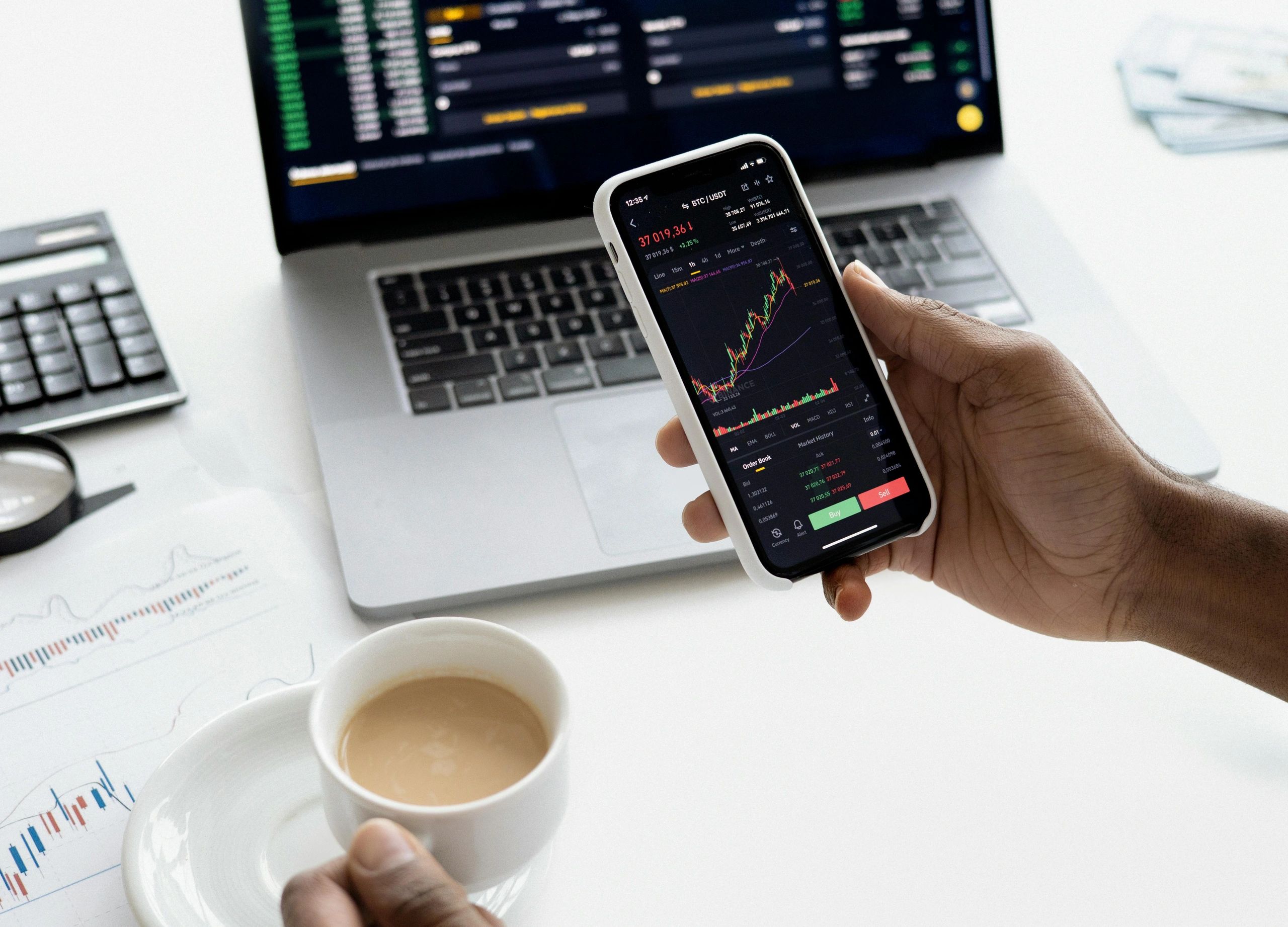
Quantitative Techniques for Enhanced Trading Profits
In the dynamic realm of finance, algorithmic trading strategies have emerged as a potent tool for profit optimization. These sophisticated systems leverage mathematical models and computer algorithms to execute trades at lightning speed, capitalizing on market inefficiencies and fleeting opportunities. By automating the trading process, algorithmic strategies mitigate emotional biases, enhance execution precision, and enable traders to analyze vast amounts of data in real time. A well-crafted algorithmic strategy can encompass a range of approaches, such as trend following, mean regression, and arbitrage.
- Moreover, algorithmic trading platforms offer robust backtesting capabilities, allowing traders to simulate their strategies on historical data and evaluate their potential performance before deploying them in live markets.
- The emergence of artificial intelligence (AI) has revolutionized the field of algorithmic trading, enabling the development of more flexible strategies that can learn from market trends and adapt to changing conditions.
- Therefore, embracing algorithmic trading strategies can provide traders with a significant benefit in today's competitive financial landscape.
Constructing Intelligent Automated Trading Systems
Deploying intelligent automated trading systems demands a meticulous approach. Algorithmic analysis is crucial for pinpointing profitable patterns within market movements. Machine learning techniques can optimize trading tactics, enabling systems to respond to evolving market situations. Robust risk management frameworks are critical to protect capital and guarantee sustainable outcomes.
A well-designed automated trading system should proactively monitor market data, trigger trades automatically, and adapt its approaches based on real-time market feedback. Comprehensive backtesting and simulation are vital for validating the success of a trading system before execution.
Embark on Algorithmic Trading: A Comprehensive Guide
Algorithmic trading has emerged as a influential force in the financial markets, permitting traders to execute complex strategies with speed. This comprehensive guide will equip you with the insights needed to master algorithmic trading and harness its potential. We'll explore the basics of algorithmic design, tactics, and risk management, offering you with a solid foundation for success.
- Beginning at the core of programming to interpreting market data and deploying trading algorithms, this guide will cover every aspect of algorithmic trading.
Regardless of your current level in trading or programming, this guide is intended to guide you on your path to becoming a successful algorithmic trader.
Financial Market Automation: A New Era
The evolution of financial markets has been defined by constant transformation. One of the most profound shifts in recent years has been the rise of automation. Algorithms and advanced software are now influencing a variety of activities within these markets, from high-frequency trading to portfolio optimization. This integration of automation offers both unprecedented possibilities and presents a number of considerations that need to be carefully addressed.
- Increased efficiency
- Reduced costs
- Improved accuracy
Ultimately, the future of financial markets will be defined by automation. Adapting to these technological advancements while addressing their challenges will be crucial for market participants to thrive in the years to come.
Quantitative Trading: Leveraging Data for Success
In the dynamic realm of finance, quantitative trading has emerged as a transformative force. This data-driven approach employs complex algorithms and statistical models to identify profitable market opportunities. By harnessing the vast abundance of financial data, quantitative traders aim to mitigate uncertainty while maximizing returns.
- Advanced algorithms are used to analyze market trends and predict price movements.
- High-frequency trading strategies enable rapid execution of trades, capturing fleeting price fluctuations.
- Machine learning techniques are increasingly integrated to improve trading performance.
Quantitative traders demonstrate a strong understanding of both financial markets and computational science. Their expertise enables them to develop and implement effective trading strategies that excel in the highly competitive environment of finance.
Navigating Automated Trading Platforms: Reviews and Comparisons
Venturing into the world of automated trading can feel overwhelming. With a plethora of platforms vying for your attention, choosing the right one is crucial for success. This is where in-depth reviews and comparisons become invaluable tools. They provide a thorough analysis of various platforms, outlining their capabilities, strengths, disadvantages, and overall user experience. By scrutinizing these reviews, you can obtain a clear understanding of each platform's suitability for your individual trading goals.
A well-structured comparison will often present key indicators side-by-side, enabling you to easily assess differences. These metrics might include fees, tradinginstruments, customer service, and platform usability. Don't solely rely on marketing statements; delve into real-user feedback to uncover the true strengths and weaknesses of each platform.
- Conduct your research diligently, consulting reputable sources and reviews from trusted financial professionals.
- Consider your own trading approach and preferences when selecting your options.
Evaluating Algorithmic Trading Strategies: A Vital Procedure
Before deploying an algorithmic trading strategy into the live market, it is essential to thoroughly backtest its performance. Backtesting involves modeling historical market data and evaluating how the strategy would have operated under those conditions. This process enables traders to pinpoint potential strengths and weaknesses of their strategies, optimize parameters, and assess its overall risk and potential of success.
- A robust backtesting framework should encompass multiple market conditions, including bull, bear, and volatile epochs.
- Furthermore, it is important to consider various timeframes and financial instruments when performing backtests.
- By conducting thorough backtesting, traders can significantly strengthen their chances of achieving profitable results in live trading.
Crafting Effective Automated Trading Rules
Automating your trading strategy can yield significant perks, but designing effective rules is crucial. Begin by pinpointing your approach. Are you a short-term speculator? Once you've established your style, develop rules based on technical indicators, market conditions, and your risk tolerance. Keep in mind to backtest your rules rigorously before deploying them in live trading.
Periodically review your automated system's performance and modify your rules as needed to enhance results. Stay informed about market shifts and evolve your rules accordingly.
Mindset of Automated Trading: Staying Ahead of the Curve
Automated trading has revolutionized financial markets, offering advanced algorithms to execute trades with precision. However, despite its technological prowess, automated trading is ultimately driven by algorithmic psychology. Understanding this interplay of emotions, biases, and decision-making processes is crucial for investors to prosper in this dynamic landscape. The constant evolution of market trends and technologies demands a adaptive mindset that can respond to changing conditions.
- Keeping abreast of the latest developments in AI is paramount.
- Continuously evaluating your trading strategy can help you discover areas for improvement.
- Controlling risk remains a fundamental pillar of successful automated trading.
By cultivating a analytical mindset and embracing advancement, traders can navigate the complexities of automated trading and exploit its immense potential.
Navigating Market Volatility with Automated Strategies
In the ever-changing world of finance, market shifts are an inherent characteristic. Portfolio managers constantly aim to minimize risk and maximize returns. Automated strategies have emerged as a powerful approach for withstanding these turbulences. By leveraging algorithms and sophisticated models, these systems can execute trades proactively, often with greater precision than human methods.
- Furthermore, automated strategies can assist in preserving a consistent approach to trading, reducing the influence of feelings.
- Consequently, allows for more logical decision-making, which can be essential in volatile market situations.
Mitigating Risk in Automated Trading Systems
Implementing stringent risk management strategies is vital for the prosperity of automated trading systems. These systems, while capable of executing trades at high speeds and with accuracy, are inherently exposed to market volatility and unforeseen occurrences. Strategic risk management involves assessing potential threats, establishing safeguards, and continuously evaluating the system to mitigate potential deficits.
- Critical risk management practices in automated trading systems include:
- Order sizing strategies to limit exposure to any single asset
- Trailing stop orders to automatically exit positions when defined price levels are reached.
- Asset Allocation across different markets to reduce the impact of any single portfolio's performance
- Historical Analysis of trading strategies to evaluate their suitability in different market conditions.
HFT: A Race Against Time
High-frequency trading functions at an astonishing velocity, leveraging cutting-edge algorithms to execute thousands of transactions per second. This unyielding pursuit of speed allows traders to exploit from even the infinitesimal market shifts. Moreover, HFT's algorithmic nature adds to its precision, minimizing human interference and optimizing the flow of market engagement.
Automated copyright Trading: The Rise of Bots
The volatile landscape of copyright trading presents both opportunities and challenges for investors. copyright enthusiasts|Investors are constantly seeking methods to maximize their profits while minimizing risk. copyright trading bots have emerged as a promising solution, automating the trading process and potentially yielding consistent returns.
- Leveraging sophisticated algorithms, these bots can execute trades at breakneck speeds, reacting to market movements in real-time.
- They can also interpret vast amounts of market intelligence, identifying profitable trading opportunities.
Despite this crucial to understand the potential challenges associated with using copyright trading bots.
Automated Portfolio Management: Optimizing Returns
In the dynamic landscape of finance, investors/traders/portfolio managers constantly seek strategies to maximize returns while minimizing/mitigating/reducing risk. Automated/AI-powered/Algorithmic portfolio management has emerged as a compelling solution, leveraging cutting-edge technology to optimize investment decisions. These systems utilize complex algorithms and sophisticated data analysis to create/develop/construct diversified portfolios tailored to individual risk tolerances/appetites/thresholds. By continuously monitoring/tracking/evaluating market trends and adjusting/rebalancing/optimizing asset allocations in real-time, automated portfolio management aims to enhance/improve/boost returns and achieve/meet/exceed predefined investment goals.
Exploiting Machine Learning for Algorithmic Trading
The realm of algorithmic trading has witnessed a paradigm shift with the integration of machine learning models. These sophisticated systems can analyze vast streams of data to identify patterns and website trends that may elude human investors. By leveraging the predictive power of machine learning, algorithmic trading systems can optimize returns while minimizing volatility.
- Additionally, machine learning algorithms continuously adapt to market changes, promising that trading actions remain current.
- As a result, machine learning is disrupting the landscape of algorithmic trading, enabling traders to master the complexities of financial markets with enhanced precision and profitability.
Real-Time Data Analysis for Automated Trading Decisions
In the dynamic landscape of financial markets, swift and reliable decision-making is paramount. Automated trading platforms are increasingly employed to capitalize on market fluctuations and optimize returns. At the heart of these systems lies real-time data analysis, a crucial component for generating effective trading decisions. By continuously processing vast amounts of market data, sophisticated algorithms can identify opportunities and execute trades at lightning speed. Real-time data feeds encompass a wide range of information, including price movements, order book depth, news events, and macroeconomic indicators.
This deluge of data presents both challenges and opportunities. Advanced analytical techniques, such as machine learning and deep learning, are deployed to uncover actionable insights from this complex dataset. These algorithms can forecast future price movements with increasing accuracy, enabling traders to make strategic decisions. Moreover, real-time data analysis facilitates risk management by providing a holistic view of market conditions and potential threats.
- Additionally, real-time data analysis can help identify arbitrage opportunities, where price discrepancies exist across different markets or asset classes.
- Concisely, the ability to process and analyze real-time data is essential for success in the fast-paced world of automated trading.
Reimagining Finance: Automation & Intelligent Trading
The financial sector is primed on the precipice of a revolutionary transformation, driven by the inexorable progress in automation and intelligent trading. This technologies are incrementally reshaping traditional approaches, ushering in an era of unprecedented efficiency, precision, and possibility.
- Sophisticated trading bots are increasingly taking center stage, capable of analyzing vast datasets at lightning speed to identify patterns and execute trades with exceptional finesse.
- This transformation is not merely hypothetical; it's already occurring in real-world financial markets, challenging the roles of traditional market participants.
- Automation is freeing human experts from mundane, repetitive tasks, allowing them to focus on more strategic aspects of finance.
Importantly, this future is not without its complexities. Securing the robustness of these systems, addressing ethical considerations, and mitigating potential vulnerabilities will be crucial to navigating this dynamic era.
Ethical Considerations in Automated Trading
Automated trading algorithms present a novel set of moral challenges. While these systems can maximize efficiency and profitability, they also introduce concerns concerning fairness, visibility, and potential bias. Guaranteeing that automated trading continues aligned with human values requires careful reflection of the broader consequences on market integrity and societal well-being.
- Algorithmic bias can lead to discriminatory outcomes, reinforcing existing inequalities in financial markets.
- Lack of transparency in trading algorithms enables it difficult to understand their decision-making processes, weakening trust and accountability.
- The speed and scale of automated trading can exacerbate market volatility, heightening the risk of systemic shocks.
Demystifying Algorithmic Trading: A Beginner's Guide
Algorithmic trading, often referred to as algo-trading, involves a set of pre-programmed instructions that execute trades automatically based on specific market conditions. Contrary traditional trading methods where decisions are made manually by traders, algorithmic trading leverages computational power and complex mathematical models to analyze market data in real-time. This systematic approach offers several potential benefits, including increased efficiency, reduced emotional bias, and the ability to execute trades at lightning speed.
For beginners, algorithmic trading might seem like a complex and daunting notion. However, with a basic understanding of market mechanics and coding fundamentals, you can decipher this exciting realm.
- Allow us to explore the key concepts behind algorithmic trading and illuminate its potential impact on the financial markets.
- Additionally, we will discuss some common types of algorithms and their implementations in real-world trading scenarios.